Blog Article
8-Step Rent-Risk Playbook for 2026: Protect Cash Flow Before You Sign
A practical lease decision framework for small businesses in 2026, with stress scenarios, negotiation targets, and calculator-first execution.
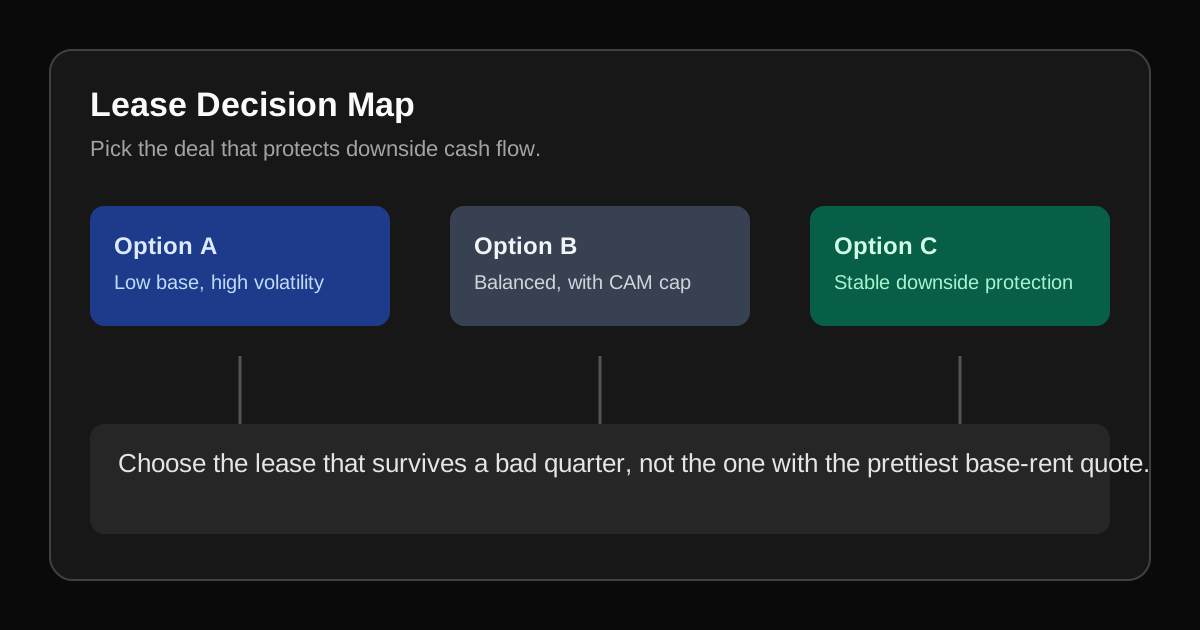
Most lease mistakes are not legal mistakes. They are math mistakes. A team sees low base rent, signs fast, then loses margin to CAM, insurance, and tax drift.
If you want fewer surprises in 2026, you need a rent-risk system, not a prettier spreadsheet.
3 SEO headline options you can test
- 8-Step Rent-Risk Playbook for 2026: Protect Cash Flow Before You Sign
- 6 Lease Checks Small Businesses Miss Before Signing in 2026
- 10-Minute Occupancy Cost Test: Avoid Hidden Rent Shocks This Year
Why this topic is hot in 2026
As of January 28, 2026, the Federal Reserve held the target range at 4.25%-4.50%. Financing and liquidity discipline still matter.
As of March 6, 2026, total nonfarm payroll employment increased by 151,000 and unemployment was 4.1%. As of March 12, 2026, CPI rose 0.2% in February and 2.4% year over year, while core CPI also rose 0.2% and 3.0% year over year. Costs are cooler than peak inflation years, but still moving enough to stress thin margins.
Source links: Federal Reserve statement, BLS Employment Situation, BLS CPI, NAIOP office demand forecast Q4 2025.
Three experiences that shaped this playbook
Experience 1: My own co-working lease review. The first quote looked cheap. The all-in monthly number was 24% higher after operating charges.
Experience 2: A founder team in Dallas. They focused on launch speed and skipped downside modeling. A true-up invoice forced a hiring freeze in month nine.
Experience 3: A public story every operator can learn from. WeWork's Chapter 11 process showed how inflexible lease burdens can dominate strategy when demand changes. Small businesses have less cushion, so this risk is even sharper.
Source: WeWork restructuring announcement (Nov 2023), WeWork emergence update (Jun 2024).
Pro Tip (Decision order): Underwrite your worst month first. If the worst month fails, the lease fails.
The rent-risk table I use with clients
| Layer | Base case assumption | Stress case assumption | Decision trigger |
|---|---|---|---|
| Base rent | Quote amount | No change | Keep as fixed anchor |
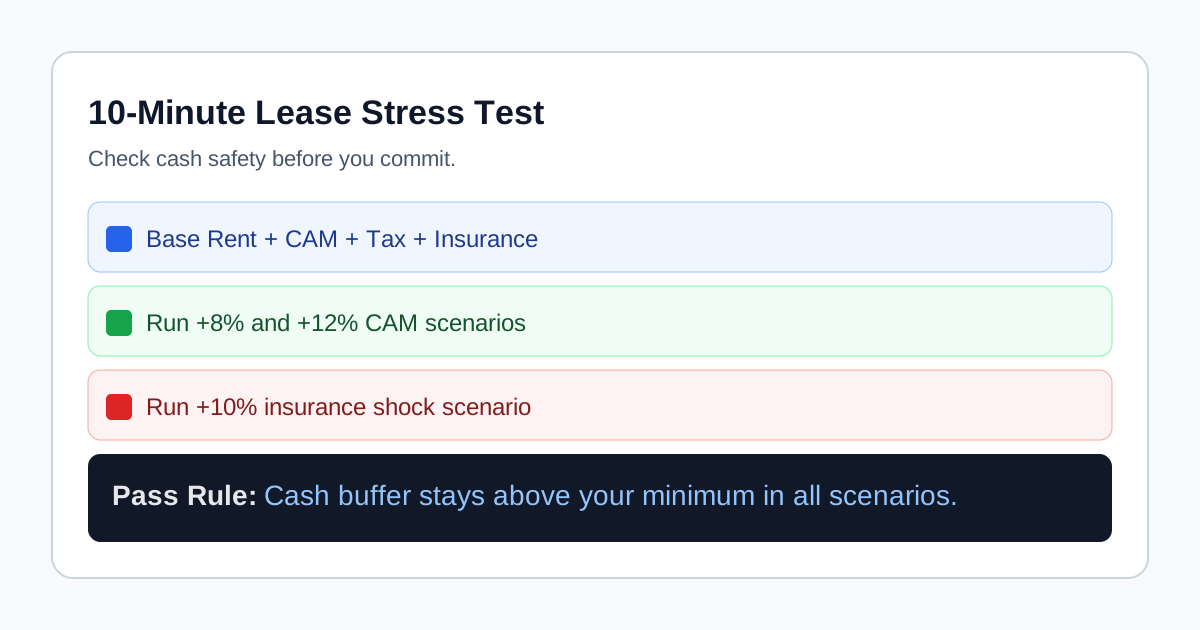
| CAM | Current estimate | +8% to +12% | Pause if buffer < 2 months |
| Insurance | Current premium | +10% | Renegotiate or cap exposure |
| Property tax | Last bill | Reassessment jump | Build monthly reserve |
| Revenue | Forecast | -15% shortfall | Confirm lease still survivable |
| Exit flexibility | Standard term | Early break needed | Negotiate options upfront |
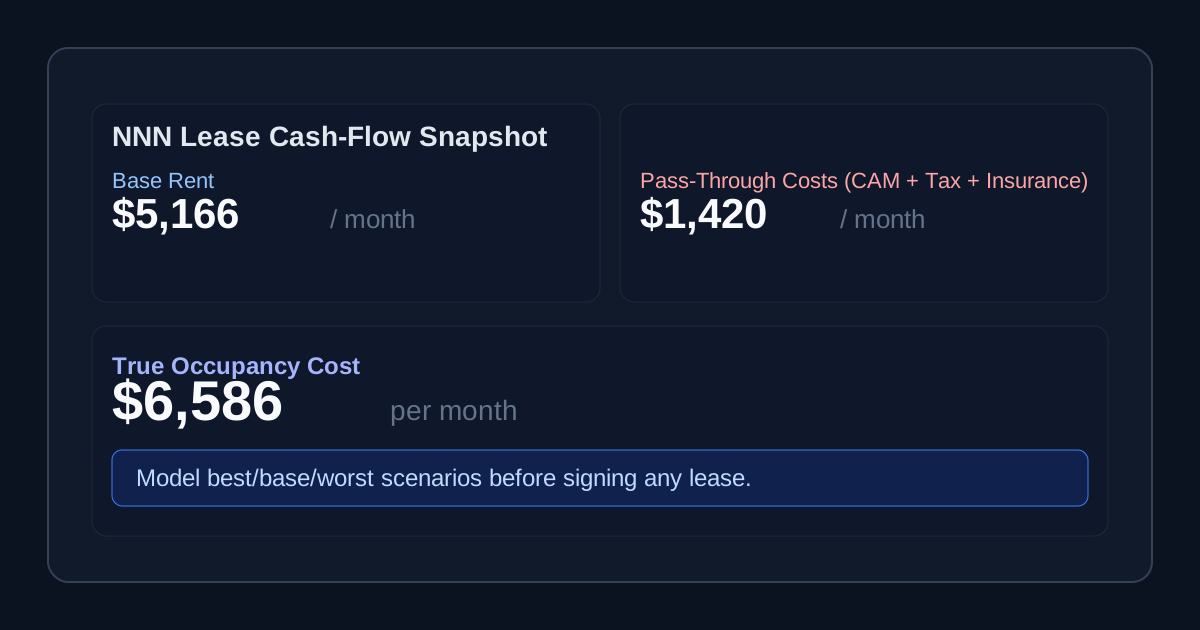
8-step execution flow
- Build a one-page occupancy model.
- Split cost into fixed and variable lines.
- Add CAM and insurance stress scenarios.
- Add a revenue dip scenario.
- Check minimum cash buffer after rent.
- Draft negotiation asks from the model.
- Validate line items with landlord docs.
- Sign only if downside stays survivable.
Run this quickly in our Commercial Lease Calculator. Then cross-check with Understanding NNN Leases and NNN Lease Traps.
Pro Tip (Negotiation): Ask for a CAM cap and audit rights in the first draft, not at the last redline pass.
What to do next
Make the lease decision with stress-tested numbers. Not with optimistic averages.
If you want, comment with your biggest unknown and I will publish a landlord-question checklist. Or run the calculator now and verify your true monthly exposure before signing.
Meta Description (140 chars): Use this 8-step lease playbook to stress-test rent risk, model hidden costs, and protect small-business cash flow before you sign any lease.