Blog Article
NNN Lease Traps in 2026: Why Your Rent Can Jump 30%
See the most common Triple Net lease traps, practical negotiation fixes, and a fast method to protect monthly cash flow.
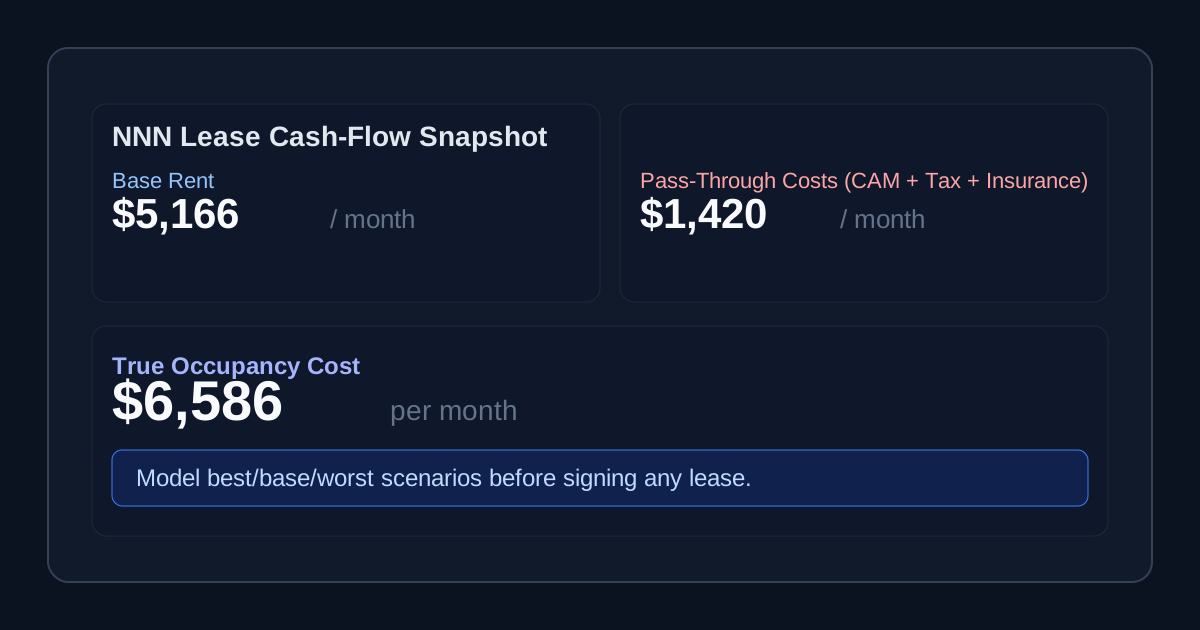
If your lease budget only includes base rent, your model is already wrong. The surprise usually arrives as CAM true-up, insurance renewal, or tax reset. By then, you are locked in.
This article shows the traps I see most and how to avoid them.
3 SEO headline options you can test
- 6 NNN Lease Traps That Add 30% to Your Rent in 2026
- 8 Landlord Clauses Smart Tenants Push Back Before Signing
- 10-Minute NNN Risk Audit: Catch Hidden Occupancy Costs Early
What changed in the operating backdrop
Policy rates remained elevated at 4.25%-4.50% after the January 28, 2026 FOMC meeting. Operating expenses still matter more than headline rent when margins are tight.
As of March 6, 2026, total nonfarm payroll employment increased by 151,000 and unemployment was 4.1%. As of March 12, 2026, CPI rose 0.2% in February and 2.4% year over year, while core CPI also rose 0.2% and 3.0% year over year. Inflation is lower than peak years, but still active enough to move lease-operating assumptions.
Source links: Federal Reserve statement, BLS Employment Situation, BLS CPI.
Three real stories that shaped my checklist
Experience 1: A retail tenant in Houston. They negotiated hard on base rent and ignored CAM detail. Year-end reconciliation erased four months of net profit.
Experience 2: A salon operator in Tampa. Insurance was treated as "small and stable" in the LOI. The next renewal cycle changed that assumption overnight.
Experience 3: A public market story everyone saw. WeWork's restructuring made one point obvious: fixed occupancy obligations can crush flexibility when demand shifts quickly. That lesson applies to small tenants, too.
Source: WeWork restructuring announcement (Nov 2023), WeWork emergence update (Jun 2024).
Pro Tip (Before LOI): Ask for prior-year CAM actuals by line item. If the landlord refuses detail, assume upside risk is worse than quoted.
The trap map
| Trap | How it looks in the quote | Cash-flow impact | Better tenant move |
|---|---|---|---|
| Low base rent anchor | "Only $X/sf" | Distracts from full occupancy cost | Underwrite all-in rent first |
| Soft CAM estimate | "Around $Y/sf" | True-up shock in month 10-12 | Add CAM surge scenarios |
| Broad CAM definition | Vague language | You fund non-core items | Narrow scope in lease text |
| No cap on controllables | Missing clause | Annual jumps without limit | Negotiate clear cap |
| Weak audit rights | Hard to verify math | Billing errors go unchecked | Add annual audit right |
| Tax pass-through ambiguity | One-line mention | Reassessment volatility | Request historical tax trend |
My 5-step pre-sign process
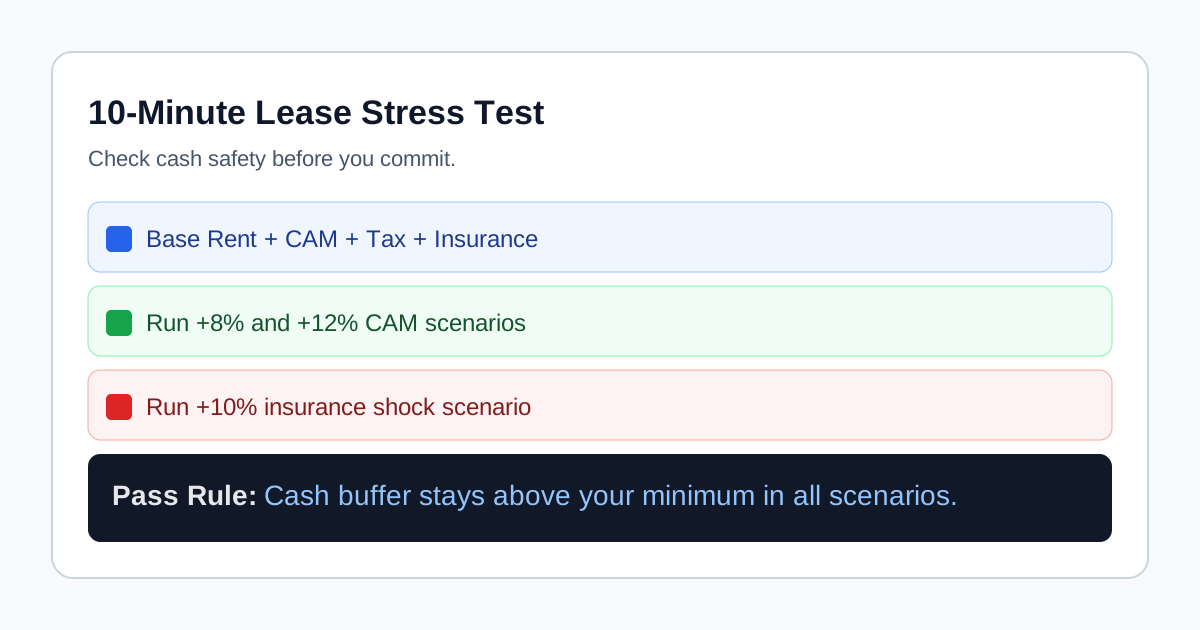
- Model base, expected, and stressed operating costs.
- Apply CAM shocks at
+8%and+12%. - Apply insurance shock at
+10%. - Confirm the lease survives your worst revenue month.
- Negotiate protections before legal redlines finalize.
Use Commercial Lease Calculator for this in minutes. Then read Understanding NNN Leases and Cash-Flow Stress Test Playbook for full context.
Pro Tip (Negotiation language): If you cannot win a strict CAM cap, ask for exclusions for capital upgrades and management overhead above a fixed threshold.
Decision rule that saves money
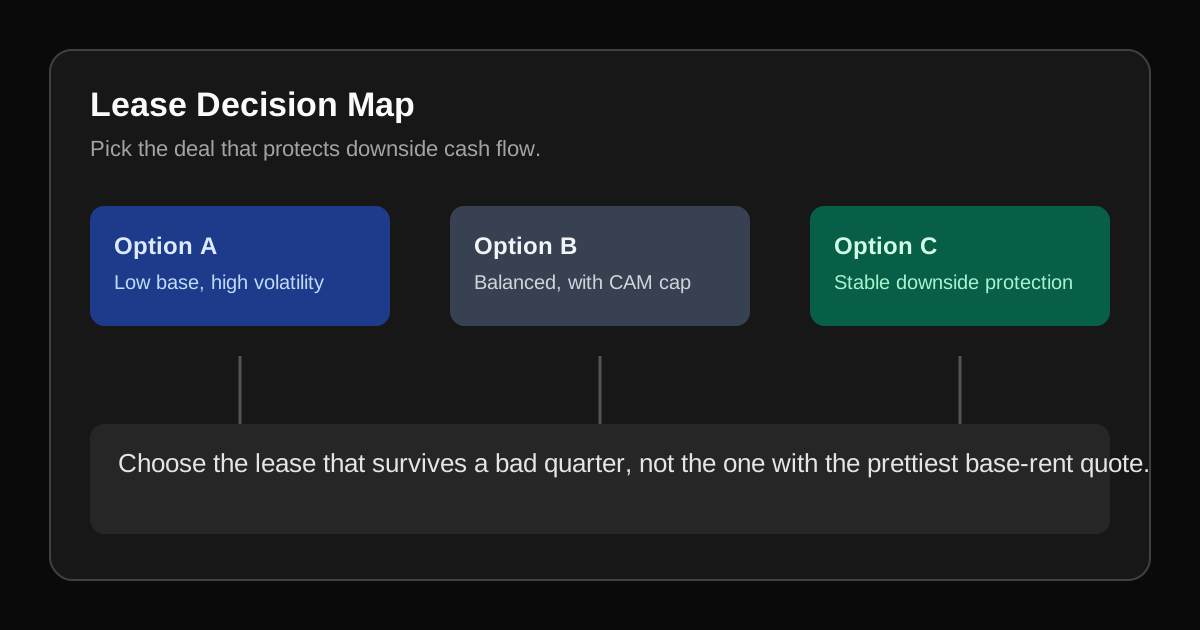
Ignore "good deal" language. Approve only deals that survive a bad quarter with cash buffer intact.
Run your numbers now, then drop your biggest lease concern in the comments. I can share a landlord-question script in a follow-up post.
Meta Description (140 chars): NNN lease clauses can quietly raise occupancy cost by 30%. Learn key traps, compare scenarios, and protect cash flow before you sign today.